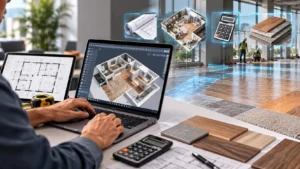
Flooring estimation is an important part of any construction project. As construction projects become more detailed and drawing sets become larger, technology has become a crucial part of making this process faster and more efficient.
In the past, flooring takeoffs were mainly completed using printed drawings, physical scales, calculators, and spreadsheets. While these methods can still be useful, they can become time-consuming when working on larger projects with multiple floors, rooms, and flooring types.
Today, digital takeoff and estimation software has changed the way flooring estimators approach their work.
From Manual Takeoffs to Digital Tools
One of the biggest advantages of digital estimation is efficiency. This is especially useful for flooring projects, where a single project can include several different materials such as carpet, LVT, tile, wall base etc. Digital tools make it easier to measure these areas and keep quantities organized according to flooring type or location. This can reduce repetitive calculations and make it easier to review the takeoff once it is completed.
Technology is also useful when dealing with large drawing sets. A project may contain architectural plans, finish schedules, details, specifications, and several drawing revisions. Digital workflows allow estimators to move through this information more efficiently and keep track of the documents being used.
The Role of MS8 in Flooring Estimation
MS8 is one of the tools used in digital flooring estimation workflows. It provides a structured way to work through flooring quantities and organize information gathered from project drawings.
For a flooring estimator, organization is just as important as measurement. Different rooms can have different flooring requirements, and a project may contain hundreds of individual spaces. Keeping measurements organized makes it easier to review the scope and identify potential issues before an estimate is finalized.
However, software is only one part of the process. Estimators still need to understand the drawings and determine whether the information being measured represents the actual project requirements.
Technology Does Not Replace the Estimator
It is easy to think that estimation software can do most of the work automatically, but accurate estimating still requires human judgment. A software program can help measure an area, but it does not necessarily understand the purpose of that area or recognize every inconsistency in the construction documents.
An estimator may need to compare floor plans with finish schedules, specifications, details, and revisions. They also need to identify missing information, check unusual conditions, and make sure that important items such as wall base, transitions, stairs, and specialty flooring areas have not been overlooked. This is where experience becomes important. Technology can make the process faster, but the estimator is still responsible for understanding the project and reviewing the results.
The Importance of Quality Control
Even with digital tools, quality control remains an essential part of flooring estimation. After completing a takeoff, the quantities should be reviewed to make sure the correct flooring materials have been measured and that all relevant areas have been included. Drawing revisions, room finish information, project notes, and specifications should also be checked. A digital takeoff can improve consistency, but it cannot guarantee that an estimate is correct. An incorrect drawing, missed area, or misunderstood finish requirement can still affect the final quantity. For this reason, the best results come from combining technology with careful review and experience.
Conclusion
Technology has made flooring estimation more efficient by helping estimators work with digital drawings, organize quantities, and manage increasingly complex projects. Tools such as MS8 reduce repetitive work and provide a more structured approach to the takeoff process.
At the same time, technology should be viewed as a tool that supports the estimator rather than replaces them. Accurate flooring estimation still depends on drawing interpretation, construction knowledge, attention to detail, and quality control. The combination of modern technology and an experienced estimator allows the estimating process to become not only faster, but also more organized and reliable.